
A Nikah Ceremony at a Royal Scottish Country House – Ladywell House, Falkland, Fife

S and G’s story is one that does make you think twice about whether there could be such a thing as fate. Their paths crossed serendipitously while S was travelling for work, despite usually being opposite sides of the Atlantic – and there was an instant spark. Despite the pandemic and hectic work schedules keeping them apart for the first couple of years of their relationship, every weekend visit, holiday away and date in airport lounges forged a deeper bond between them, and finally they decided to return to G’s homeland for their wedding.
Close to G’s hometown, Ladywell House offered the perfect flexibility for the multicultural wedding that S and G were looking for. Completely privacy, fantastic history, and a setting that could honour the significance of a traditional Nikah while also the flexibility to nod to a traditional Scottish reception. A traditional Nikah ceremony, conducted by an Imam, in a house formerly home to Frances Shand Kydd and visited by Princess Diana and her sons. It was, by any measure, an extraordinary day to document.
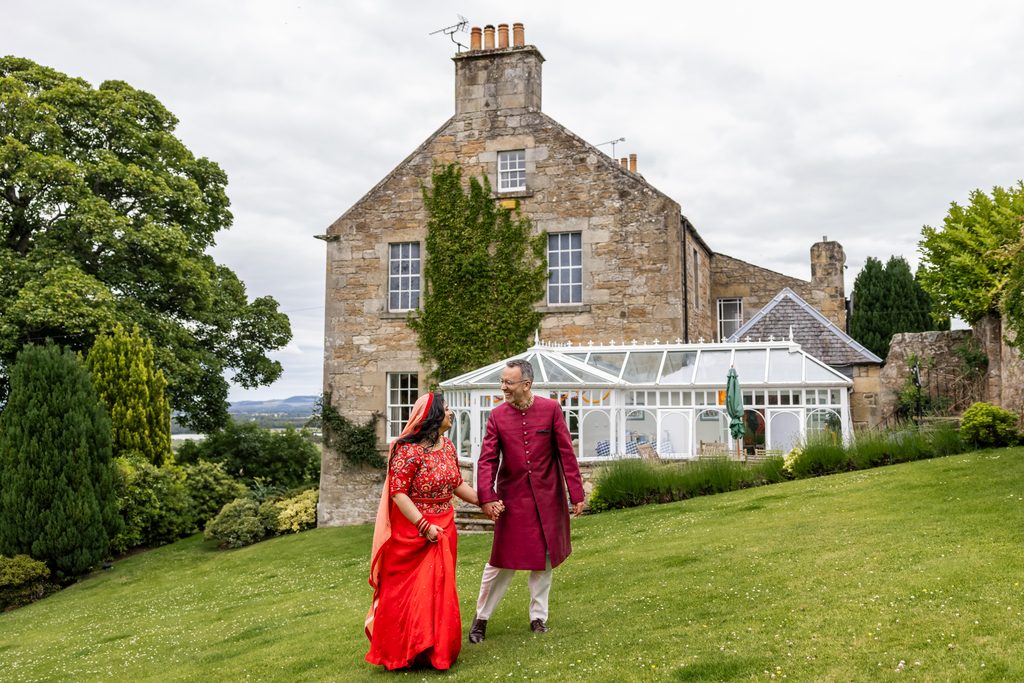
Ladywell House, Falkland – A Royal Scottish Country House
Ladywell House sits on the edge of Falkland in central Fife – a Georgian country house built in 1806, set amidst hundreds of acres of farmland with views over the village and the surrounding Fife countryside. It is an extraordinary property – the rooms are individually appointed with antiques, the master bedroom has a roll-top bath, and the dining room features an open fire and a mahogany table that seats fourteen. For international couples, Ladywell presents a unique slice of Scottish culture and history that can be hired to be exclusively their own.
What makes Ladywell House genuinely unique among Scottish wedding venues is its royal history. The house was formerly home to Frances Shand Kydd – mother of Princess Diana – and was visited by Diana herself, along with Princes William and Harry. The rooms where the royals stayed are still named in their honour. For a couple travelling from Canada to marry in Scotland, there is something quietly extraordinary about celebrating in a house with that kind of history running through its walls.
The house sleeps up to fourteen guests, making it a true exclusive use property, perfect for travelling with your wedding party. For Sadaf and Graeme, who wanted their Nikah ceremony to feel intimate and private, it was exactly right.
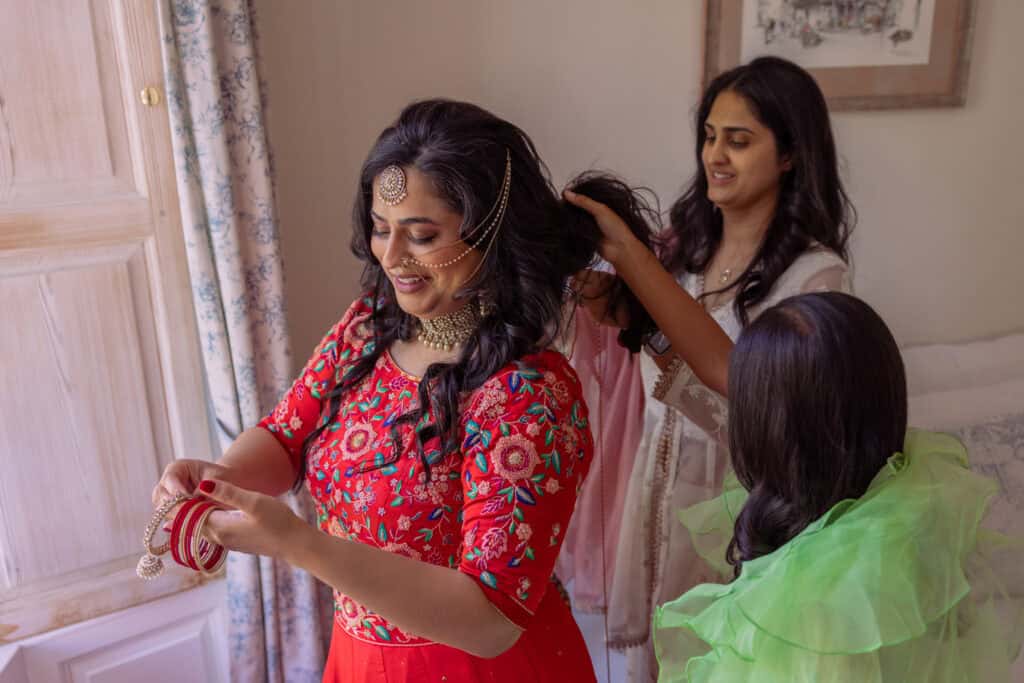
Getting Ready at Ladywell House, Falkland – The Exclusive Use Advantage
One of the gifts of an exclusive use property is definitely felt most in the morning – both S and G were able to get ready at Ladywell House itself, in private suites that have held generations of history. Exclusive Use houses like Ladywell simply win with the private, unhurried atmospheres that a hotel simply cannot replicate. Without staff or coordinators following a timeline, Ladywell House was able to support an unhurried, private atmosphere that a commercial venue or hotel just cannot replicate even with the best intentions. The house was entirely S and G’s from the moment they arrived, and that sense of belonging and ease carried through into every frame from the day.
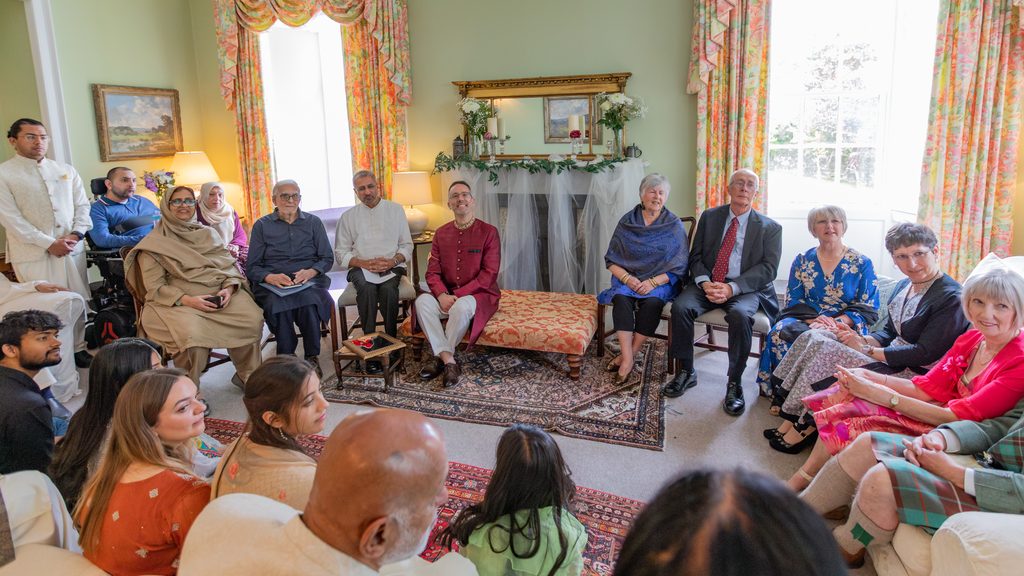
The Nikah Ceremony at Ladywell House – A Traditional Islamic Wedding in Fife, Scotland
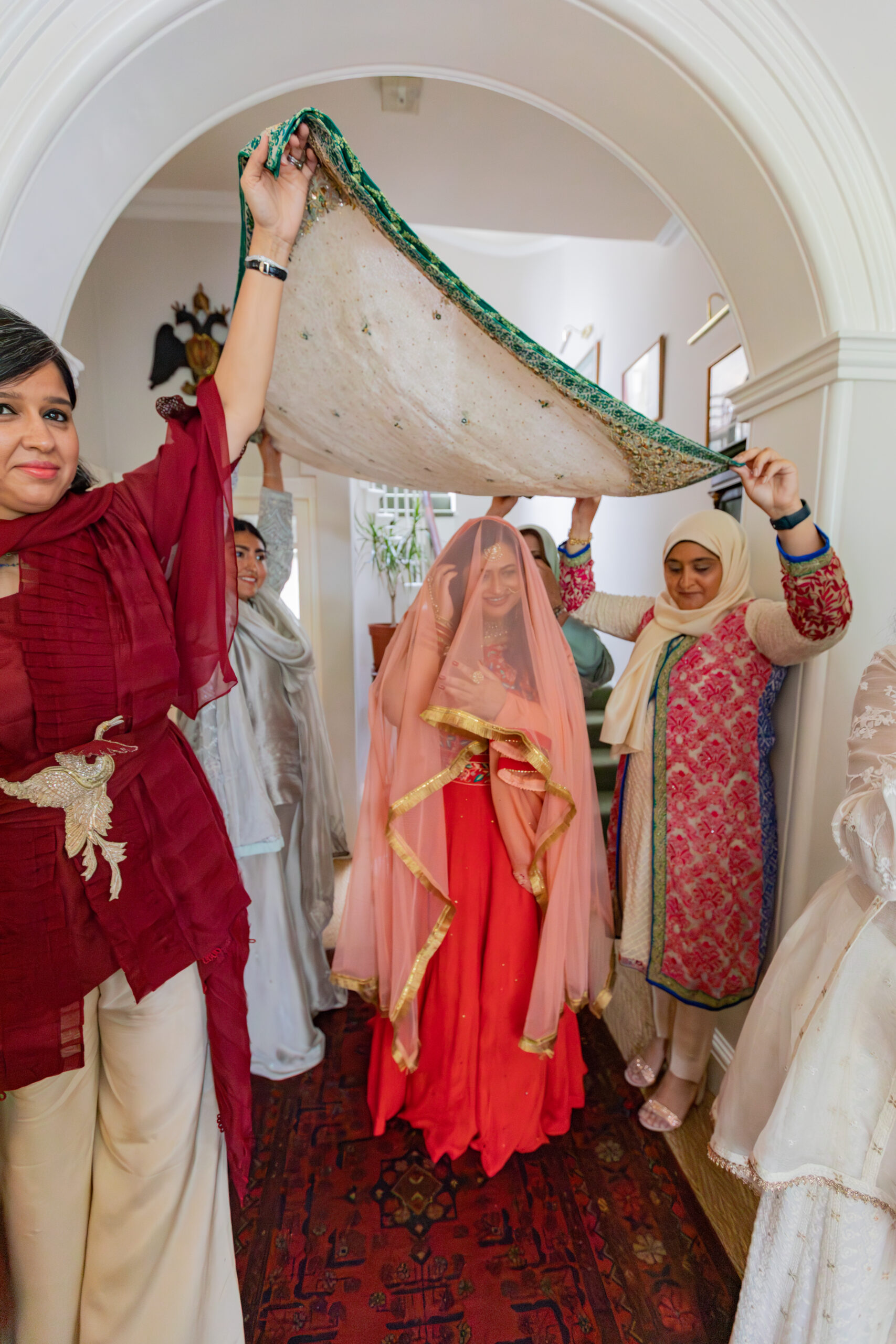
The Nikah ceremony was conducted inside Ladywell House itself as the Scottish weather in June was being characteristically temperamental – but the interior of the house was ample space, and provided a setting of real warmth and character. The ceremony was led by an Imam, making it a full and traditional Nikah in every sense, observed with the dupatta canopy held overhead and the mirror – the couple seeing each other’s reflection simultaneously.
Two cultures filled that room, gathered together in a Georgian house in Fife that has its own connections to British royal history. The speeches that followed were heart-wrenching – the particular combination of warmth, humour, and genuine emotion that only happens when two very different families decide, wholeheartedly, that they are on the same side.
The catering was provided by Taza Curry House from Dundee – a detail very much worth noting for any couple planning a Nikah or South Asian wedding in Scotland. Taza offer mobile catering for events and the food was extraordinary, brought in specifically for the day and freshly prepared in Ladywell House’s large kitchen. If you’re planning a similar celebration and wondering about catering, they are worth contacting directly. Hailing from Celtic origins and as someone who burns when the sun even looks in my direction, I can’t profess to have any sort of in-depth knowledge about Asian cuisine – we are of course the country of breaded fish and breaded potatoes, and of course classic Rarebit which let’s be honest is just a cheese toastie. But I know a good curry when I taste one, and Taza’s were off the charts.
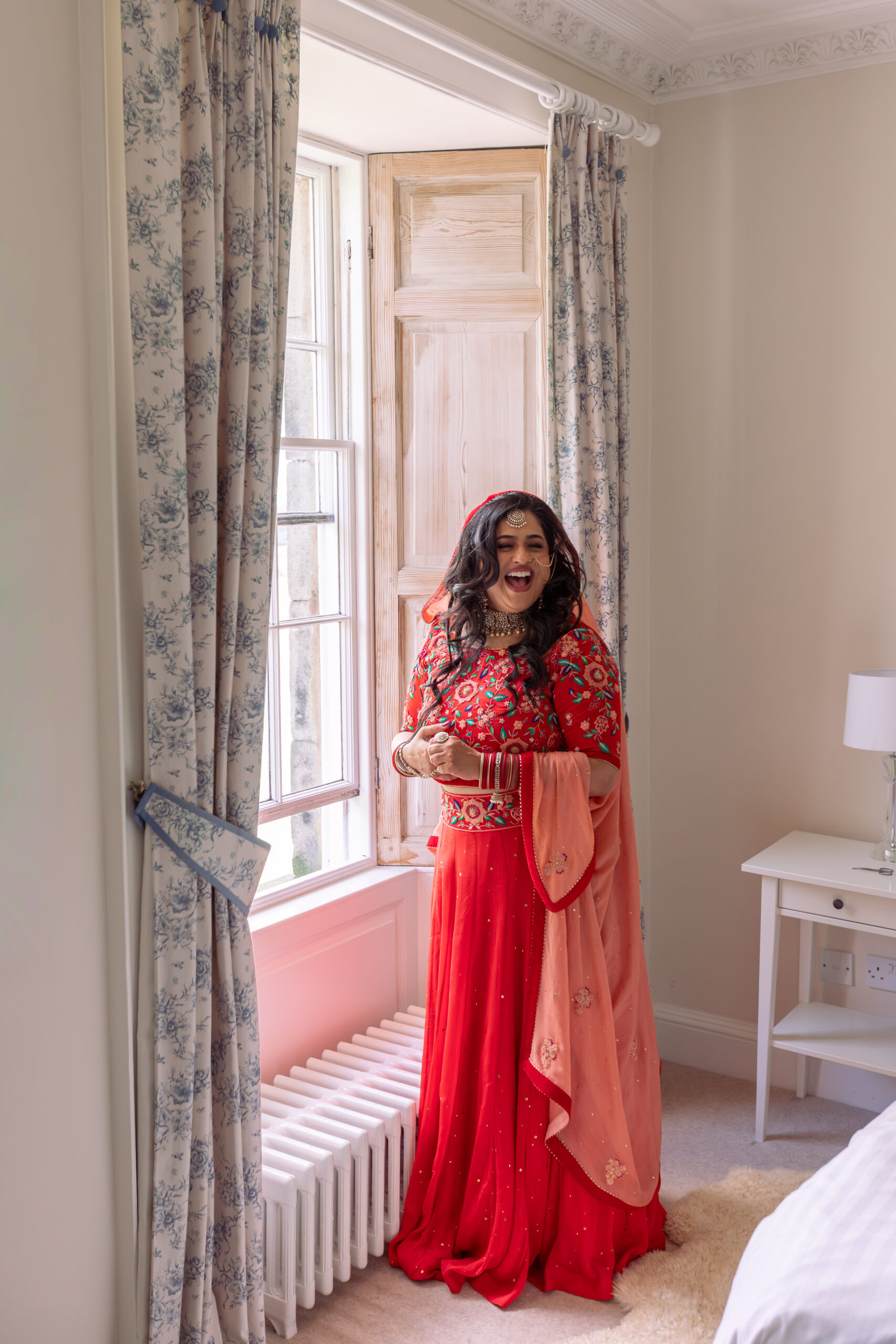
Couples Portraits in the Grounds of Ladywell House
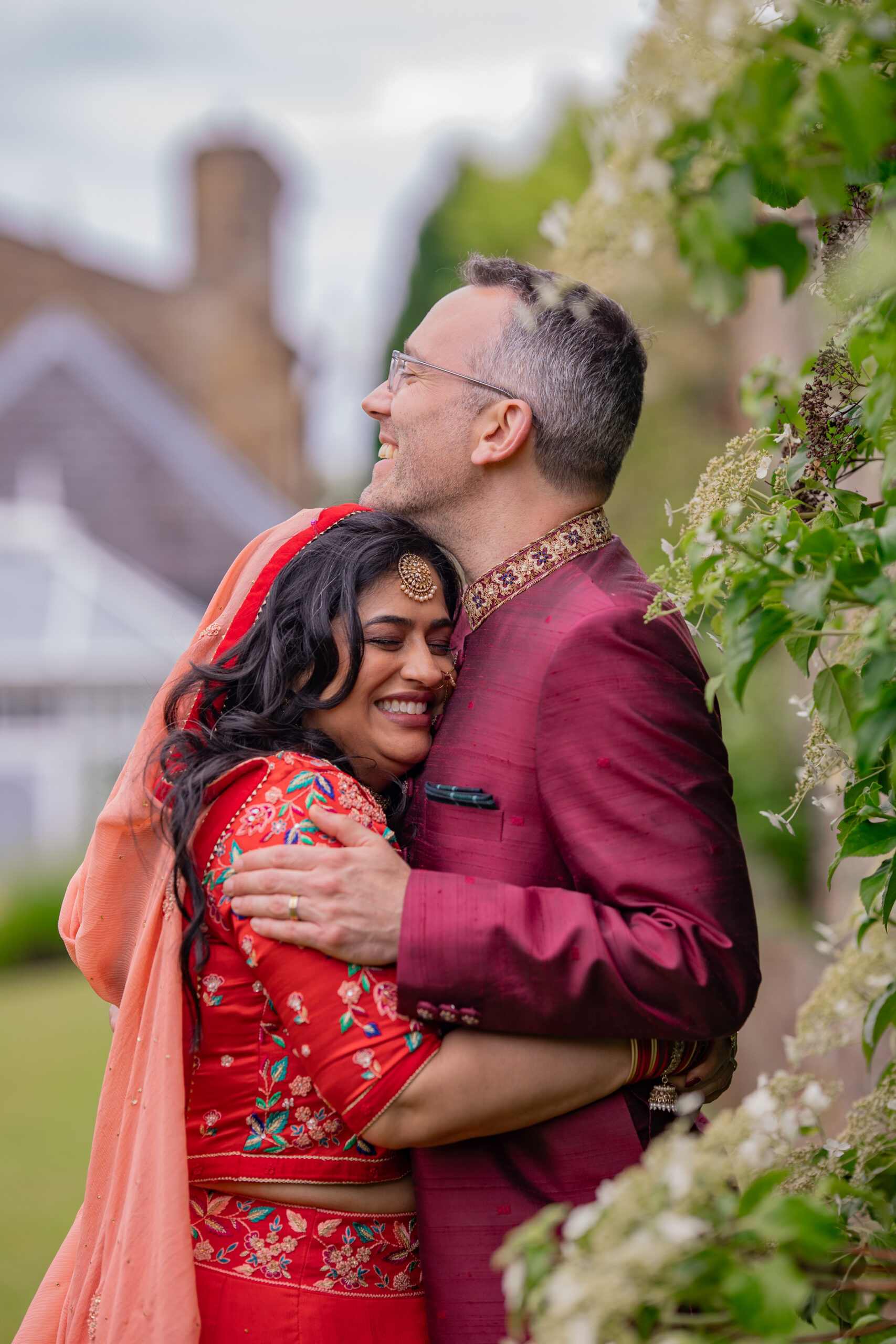
The grounds of Ladywell House gave us everything we needed for couples portraits in early June. A climbing rose in full bloom against a stone wall leaves little to be desired with the temperamental weather actually leaving us just enough cloud to give flattering light while still being bright enough to really bring out the colour in S and G’s outfits.
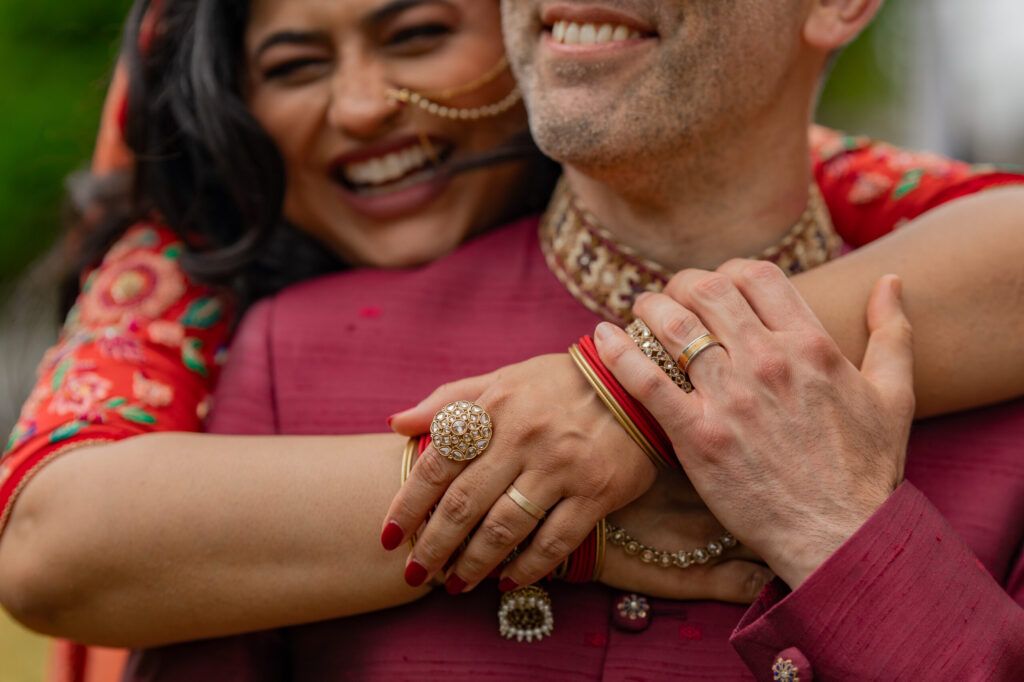
What struck me most during the portraits was how natural S and G were together. Their chemistry was immediate and obvious once I’d seen them interact – the kind that makes a photographer’s job very easy and opens the door to the best creative work, because you’re not consciously creating moments – you’re simply documenting something taht already exists between two people.
A Bespoke Multicultural Wedding at an Exclusive Use Scottish Country House
What made Sadaf and Graeme’s wedding day distinctive – and what I find most worth writing about here – is the combination of elements that sound rather unusual but worked completely in practice. A traditional Islamic Nikah ceremony conducted by an Imam, in a Georgian Scottish country house with royal connections, for a Pakistani-Scottish couple based in Canada, with Dundee’s finest curry arriving by van. Every element was intentional – right down to the specialty tea wedding favours – and that is exactly what made it so fantastic.
A Non-South Asian Photographer at a Traditional Nikah – Review
I’ll let S speak for herself. Her review of the day includes a line I think about often:
“I had concerns about a non-South Asian photographer capturing my very traditional ceremony – but absolutely no regrets. She was the best. If you’re thinking about hiring Charlotte as your photographer – don’t walk, run!”
That line means more to me than almost any other review I’ve received. Photographing traditions that aren’t your own is a responsibility – one I take seriously, and one that I hope showed in the work. Every detail of a Nikah ceremony matters, and every detail deserved to be documented with the care it was given.
You can read Sadaf’s full review, alongside those from other couples, on my reviews page.
Nikah & Multicultural Wedding Photography in Scotland
Scotland is an extraordinary setting for a multicultural wedding. I can’t bring this blog to a close without giving credit to Scotland’s welcoming nature as an entire culture – there are few receptions as warm as a Scot’s, so for celebrations that are merging two cultures, I can’t think of a better backdrop.
If you are planning a Nikah ceremony, a South Asian wedding, or any celebration that brings two cultures together in Scotland, I would love to hear from you. I approach every ceremony I photograph with the same commitment – to understand what matters, to stay out of the way of the moments that need to be felt rather than directed, and to deliver a gallery that reflects the full significance of what took place.
This post sits alongside my write-up of Atia and Shahariar’s Nikah ceremony at Rufflets, St Andrews – another traditional Nikah in a very different Scottish setting, if you’d like to see more of how I work within this ceremony format.
You can find out more about my Scotland wedding photography here.
Multicultural & Destination Wedding in Scotland – Your Questions Answered
Planning a multicultural or destination wedding in Scotland from overseas involves a lot of legwork, from cultural ceremony requirements, exclusive use venues, finding the right photographer for a non-traditional celebration, and what to expect from suppliers based thousands of miles away. I’ve answered the most common ones below. If yours isn’t here, get in touch and I’ll be more than happy to help.


